


Rolling high grassland in the far west, and the ashram of the Khaptad Baba.
Overview
Khaptad is unlike the rest of Nepal’s parks: a plateau of open meadow and oak forest at around 3,000 metres in the far-western hills, spread across four districts, without a single big peak in it.
It is a religious site as much as a natural one. The Khaptad Baba, a Hindu ascetic, lived and meditated here for around fifty years, and his ashram, the Khaptad Daha lake and the Tribeni confluence draw pilgrims each summer.
The meadows flower through the monsoon, which is the opposite of the rest of the country and the best reason to come.
Itinerary
Day 1 :
Arrive in Kathmandu
You are met at the airport and transferred to your hotel. The briefing covers the route, the permits and the kit. Khaptad is unlike the rest of Nepal's national parks: a rolling plateau of open meadow and oak forest at around 3,000m in the far-western hills, spread across Bajhang, Bajura, Achham and Doti, with no big peaks in it at all. It is also a religious site as much as a natural one. Very few foreign visitors go there, and the logistics reflect that - this is a camping trek with simple support.
Day 2 :
Fly Kathmandu to Dhangadhi
A flight of about an hour and a quarter takes us to Dhangadhi in the far-western Terai, close to the Indian border. It is hot and flat, and it is the gateway to a part of Nepal that sees almost no tourism whatever. The afternoon is free and there is time to look round the bazaar. We stay overnight in Dhangadhi and start early tomorrow, because the drive north is a long one.
Day 3 :
Dhangadhi to Silgadhi
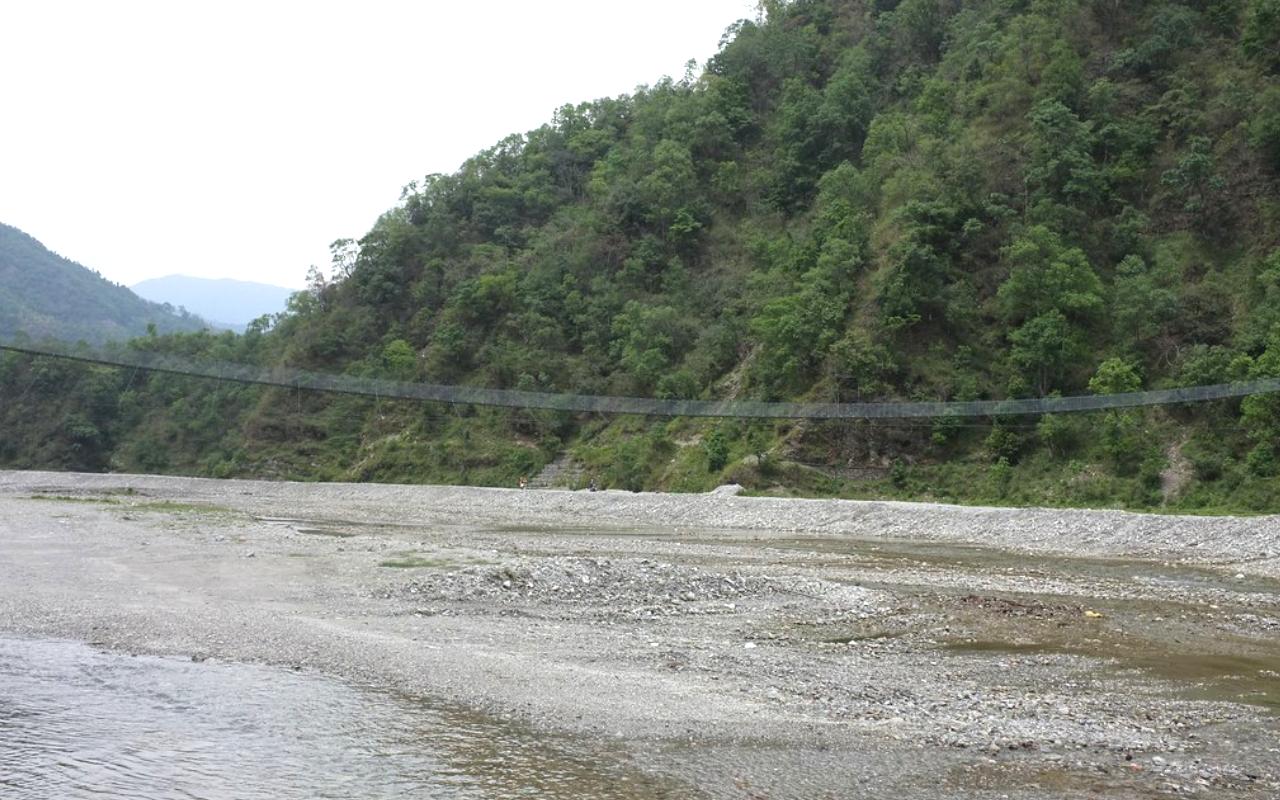
A long drive north into the western hills to Silgadhi, the district headquarters of Doti, at about 1,300m. It takes most of the day on a road that climbs steadily out of the Terai through sal forest and then terraced farmland. Silgadhi is a hill town with a bazaar and the Shaileshwari temple above it, which is worth a walk up in the late afternoon for the view. Very little English is spoken this far west. Overnight in a simple hotel.
Day 4 :
Silgadhi to Jhigrana
The walking starts. We climb from Silgadhi through terraced farmland and into oak forest, gaining height steadily all day - four to five hours to Jhigrana at about 1,800m. The villages here are Chhetri and Thakuri and the architecture is quite different from the eastern hills: stone houses with slate roofs and carved wooden window frames, and a good deal of ochre and white paint. Camp near the village.
Day 5 :
Jhigrana to Khaptad
The climb onto the plateau, five to six hours through dense oak and rhododendron forest that opens quite suddenly near the top into rolling grassland. Khaptad is startling when you first reach it: mile after mile of open meadow at around 3,000m, dotted with woodland, with no dramatic peaks and no sharp edges - closer to a Scottish moor than to anything else in the Himalaya. The park headquarters and the small guest facilities are in the middle of it. Camp on the plateau.
Day 6 :
Khaptad plateau
A full day exploring. The Khaptad Baba ashram is the centre of the site: a Hindu ascetic lived and meditated here for around fifty years until his death in 1996, and the area immediately around the ashram is treated as sacred, with restrictions on meat, alcohol and noise. We walk out to Khaptad Daha, the small lake with the Shiva shrine beside it; to Tribeni, where three streams meet and a large pilgrimage gathering is held each August; and up to the Sahasra Linga viewpoint at 3,200m, the highest point of the plateau. The meadows flower through the monsoon, which is the opposite of the rest of Nepal and the best argument for coming in July or August.
Day 7 :
Khaptad to Jhigrana
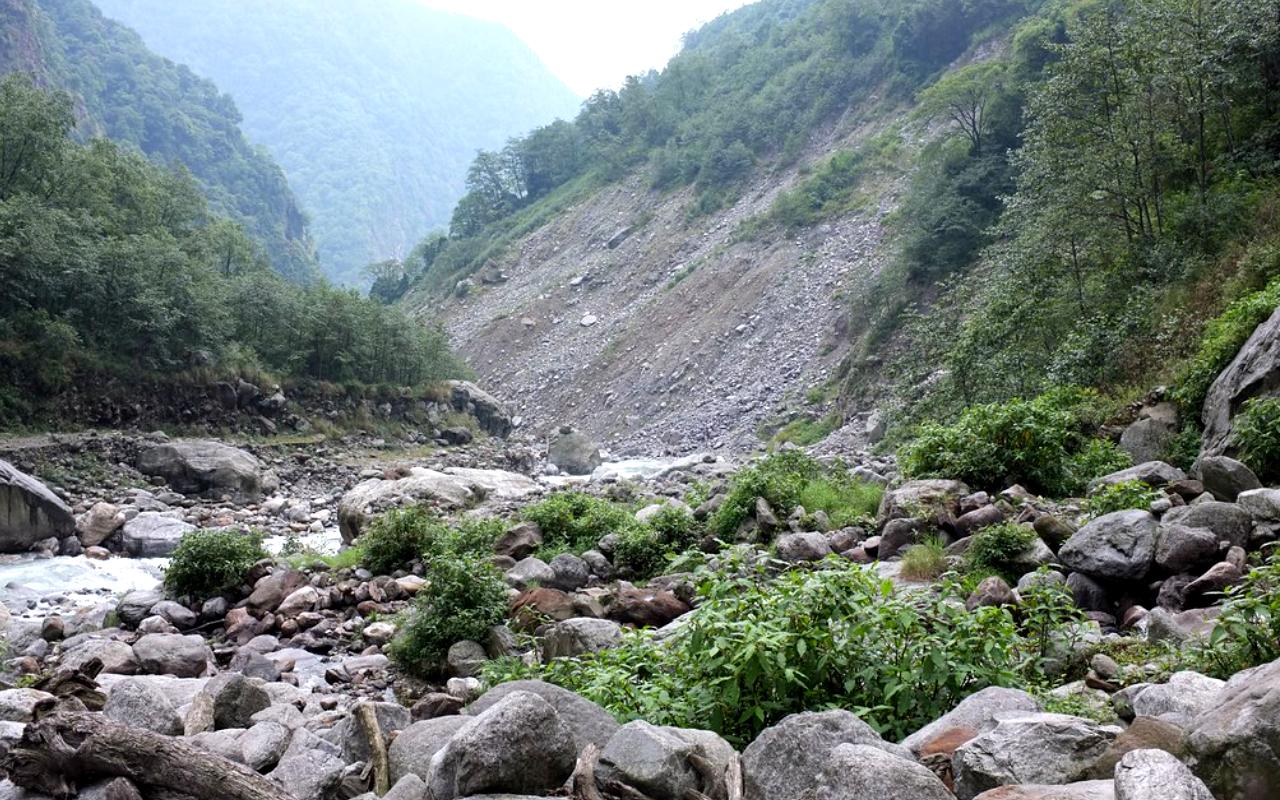
Back down off the plateau to Jhigrana, four to five hours of descent through the oak forest. Going down, the transition from open grassland to closed woodland to terraced farmland happens in reverse and quite quickly. There is usually more wildlife activity on the descent - Khaptad has leopard, Himalayan black bear, barking deer and over two hundred and fifty bird species, and the forest edge is the best place to see any of it. Camp at Jhigrana.
Day 8 :
Jhigrana to Silgadhi and drive to Dhangadhi
The last of the walking, down to Silgadhi in three to four hours, then the long drive back to Dhangadhi in the afternoon. It is a full day of travel and it ends in the Terai heat. There is time to wash and eat properly in Dhangadhi, and the last evening is spent with the crew.
Day 9 :
Fly Dhangadhi to Kathmandu
The flight from Dhangadhi to Kathmandu takes about an hour and a quarter and puts you back in the capital in the middle of the day, crossing the whole width of Nepal in the process - it is worth a window seat, because the entire Himalayan chain runs along the northern horizon for the length of the flight. You are transferred to your hotel and the afternoon is free, which after a week in the far west most people spend on a long shower, a proper meal and Thamel. There is a farewell dinner in the evening with the crew, and we go through your onward flight arrangements and any luggage you have left in storage.
Cost
The Cost Includes
- 2 nights twin-sharing hotel accommodation in Kathmandu with breakfast
- Full camping support for 6 days - two-person tents, dining and toilet tents, mattresses and all kitchen equipment
- All meals on trek - 6 breakfasts, lunches and dinners, with tea or coffee
- Government-licensed trekking guide, and one porter between two trekkers
- Guide and porter wages, insurance, equipment, food and accommodation
- All trekking permits, TIMS card and national park or conservation area fees
- Ground transport to and from the trailhead
- Purified drinking water on trek, by filter or purification tablets
- Basic first-aid kit and a pulse oximeter carried by the guide
- Farewell dinner in Kathmandu
The Cost Excludes
- Domestic flights where the itinerary uses them, quoted separately
- Lunches and dinners in Kathmandu
- Hot showers, battery charging and Wi-Fi at teahouses
- Bottled or boiled water, and all other drinks
- Personal trekking equipment and clothing
- Extra nights in Kathmandu caused by an early return or a flight delay
- International flights to and from Nepal
- Nepal entry visa (USD 30 for 15 days, USD 50 for 30 days, USD 125 for 90 days, on arrival at Kathmandu airport)
- Travel and medical insurance, including emergency evacuation cover
- Personal expenses - laundry, phone calls, bar bills and shopping
- Tips for your guide and driver
- Anything not listed under "The Cost Includes"