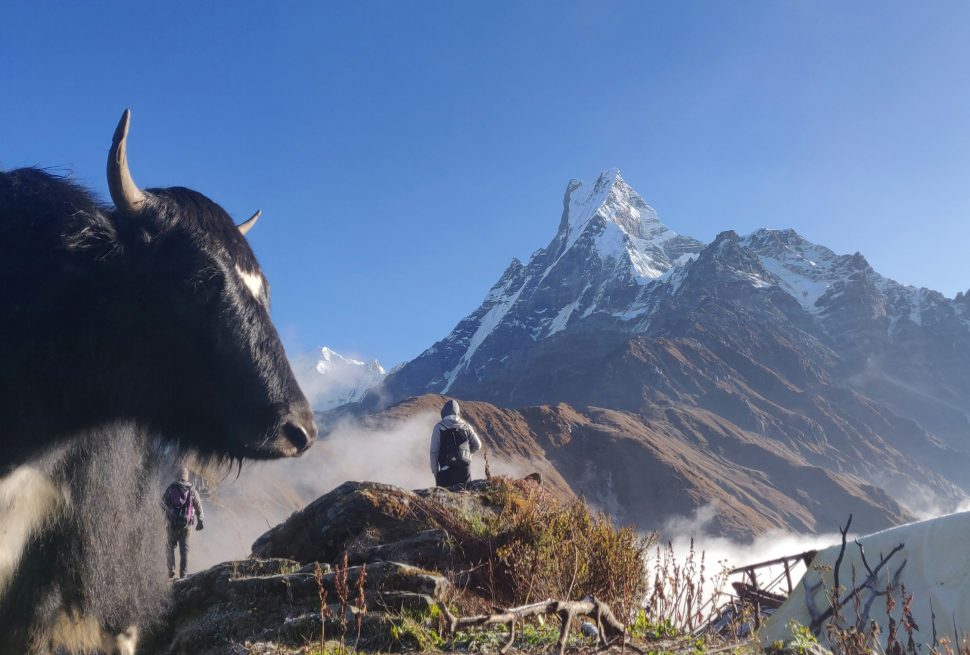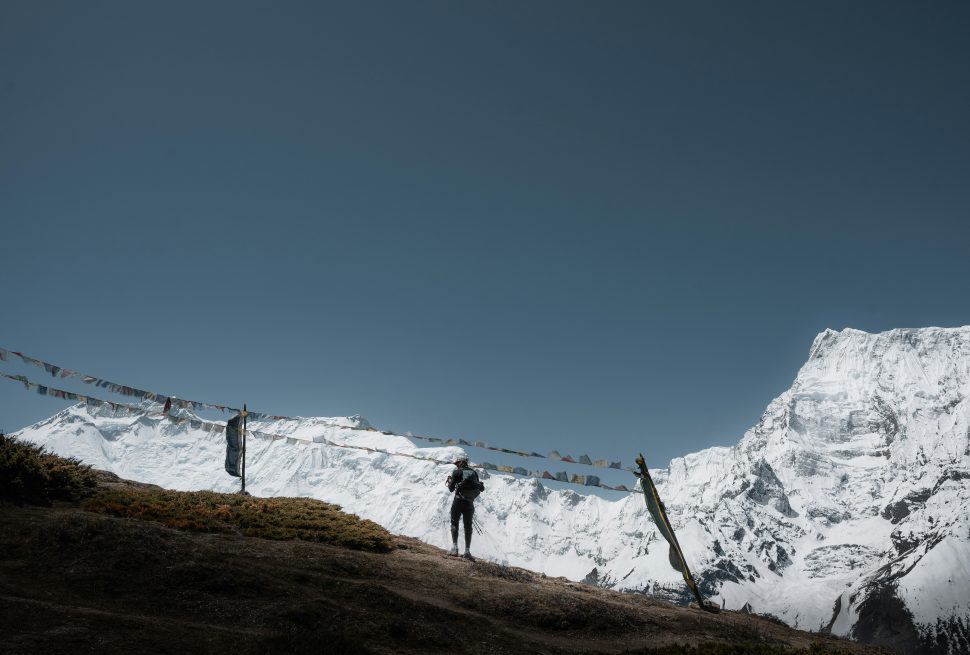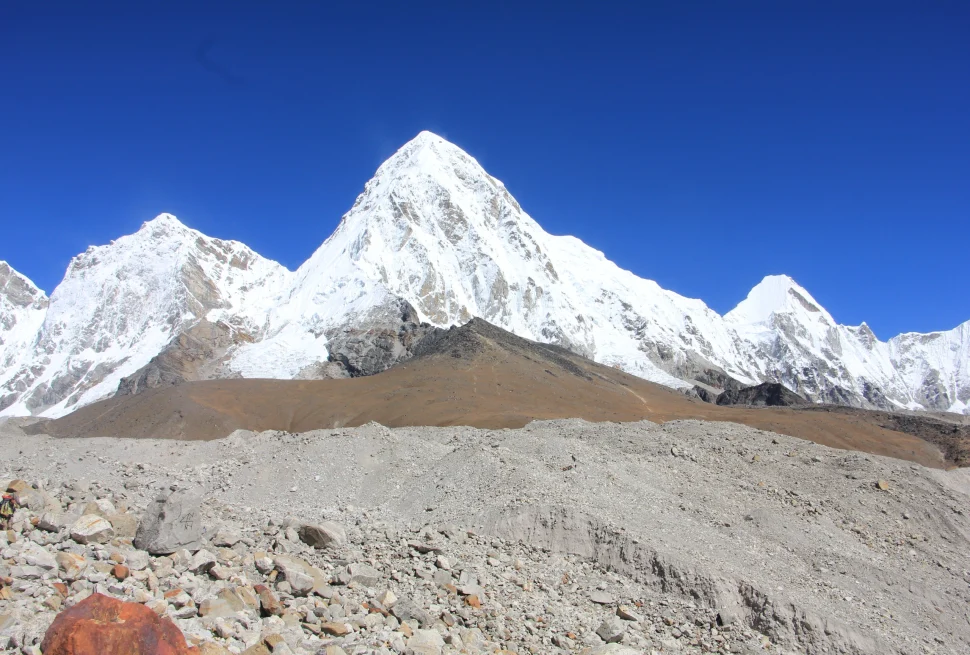

This is the question we are asked most often. There is no universal answer, but there is usually a clear answer for you.
Altitude
Everest Base Camp reaches 5,364 m and sleeps at 5,164 m. Annapurna Base Camp tops out at 4,130 m. If you have reacted badly to altitude before, or you are nervous about it, Annapurna is the safer choice by a considerable margin.
Getting there
Everest requires the Lukla flight — spectacular, but subject to delays that can cost you two or three days. Annapurna is reached by road from Pokhara. If your schedule is tight or you dislike small aircraft, that matters.
Scenery
Everest is starker: above Namche you are in a high, dry, glacial world of rock and ice. Annapurna is greener and more varied — you pass through subtropical forest, rice terraces, rhododendron woods and finally a glacier basin, often within the same week. Everest has the bigger mountains; Annapurna has the greater variety.
Cost
Annapurna is meaningfully cheaper, mostly because there are no flights. Expect roughly half the cost of an equivalent Everest trek.
Crowds
Both are busy in October. Everest concentrates trekkers on a single trail, so it feels busier. Annapurna has multiple routes, so crowds disperse — although Poon Hill in peak season is the busiest trail in Nepal.
Culture
Everest is Sherpa country — Tibetan Buddhist, with monasteries at Tengboche and Pangboche. Annapurna is more mixed: Gurung and Magar villages lower down, Thakali and Tibetan-influenced communities in Manang and Mustang.
Quick guide
- Two weeks, good fitness, want the icon: Everest Base Camp.
- Ten days, moderate fitness, altitude-wary: Annapurna Base Camp.
- Under a week: Poon Hill or Mardi Himal.
- Three weeks, experienced: Everest Three Passes or the Annapurna Circuit with Tilicho.
Still undecided? Tell us your dates and fitness and we will make a recommendation.