
Langtang is the closest serious trekking region to Kathmandu — a seven-hour drive rather than a flight — and it remains one of the least crowded. It is also a valley with a difficult recent history that every visitor should understand.
The 2015 earthquake
The April 2015 earthquake triggered an avalanche that buried Langtang village almost entirely, killing more than 300 people. The valley was closed for over a year. It has since been rebuilt, largely by returning families, and tourism is now central to that recovery. Trekking here is a direct contribution to it.
The route
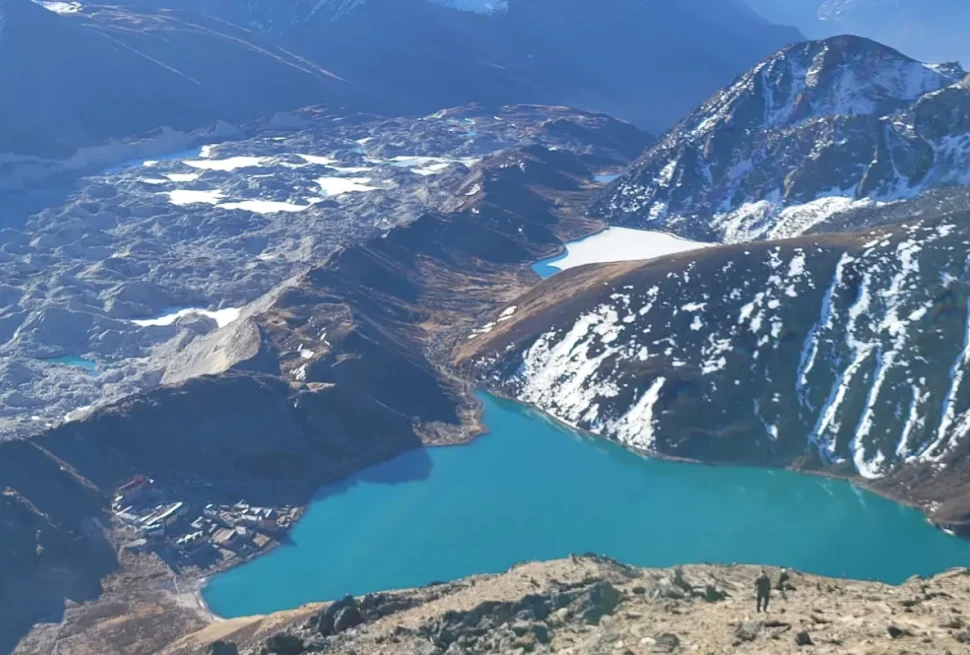
Drive from Kathmandu to Syabrubesi, then walk up the Langtang Khola through dense forest — this is prime red panda habitat, though sightings are rare — to Lama Hotel and on to Langtang village. Above it, Kyanjin Gompa at 3,870 m is the trek’s base for day walks.
Kyanjin Ri and Tserko Ri
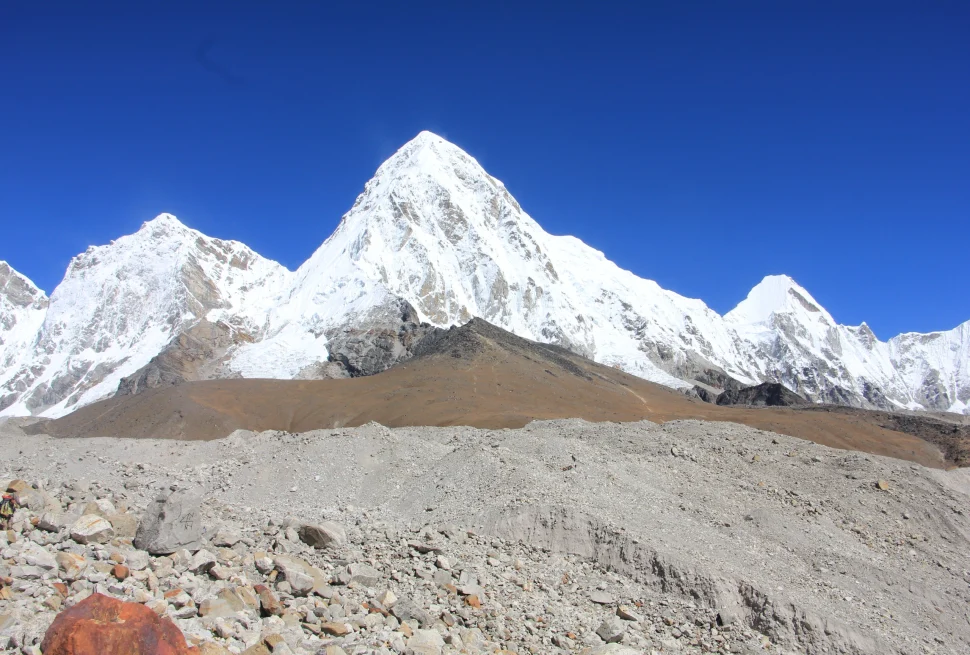
The two viewpoints above Kyanjin are the highlight. Kyanjin Ri (4,773 m) is a steep morning climb with the Langtang Lirung glacier directly opposite. Tserko Ri (4,984 m) is longer and harder but gives a full panorama of the valley. Take an extra day at Kyanjin and do both.
How hard
Moderate. Seven to nine days, sleeping no higher than 3,870 m unless you climb the viewpoints. The trail is steep in the forest section but never technical.
Practical notes
- Permits: Langtang National Park entry and TIMS card.
- Lodges are newer than elsewhere in Nepal, having been rebuilt after 2015.
- The local cheese factory at Kyanjin is genuinely worth a visit.
- Best in October–November and March–May.
Ask us about Langtang departures — it is an excellent choice if you want scale without crowds.