Ask a Nepali guide which Everest route they would walk on their own time and a surprising number will say Gokyo. It is longer, higher and harder than the standard trail – and considerably more beautiful.
The route in short
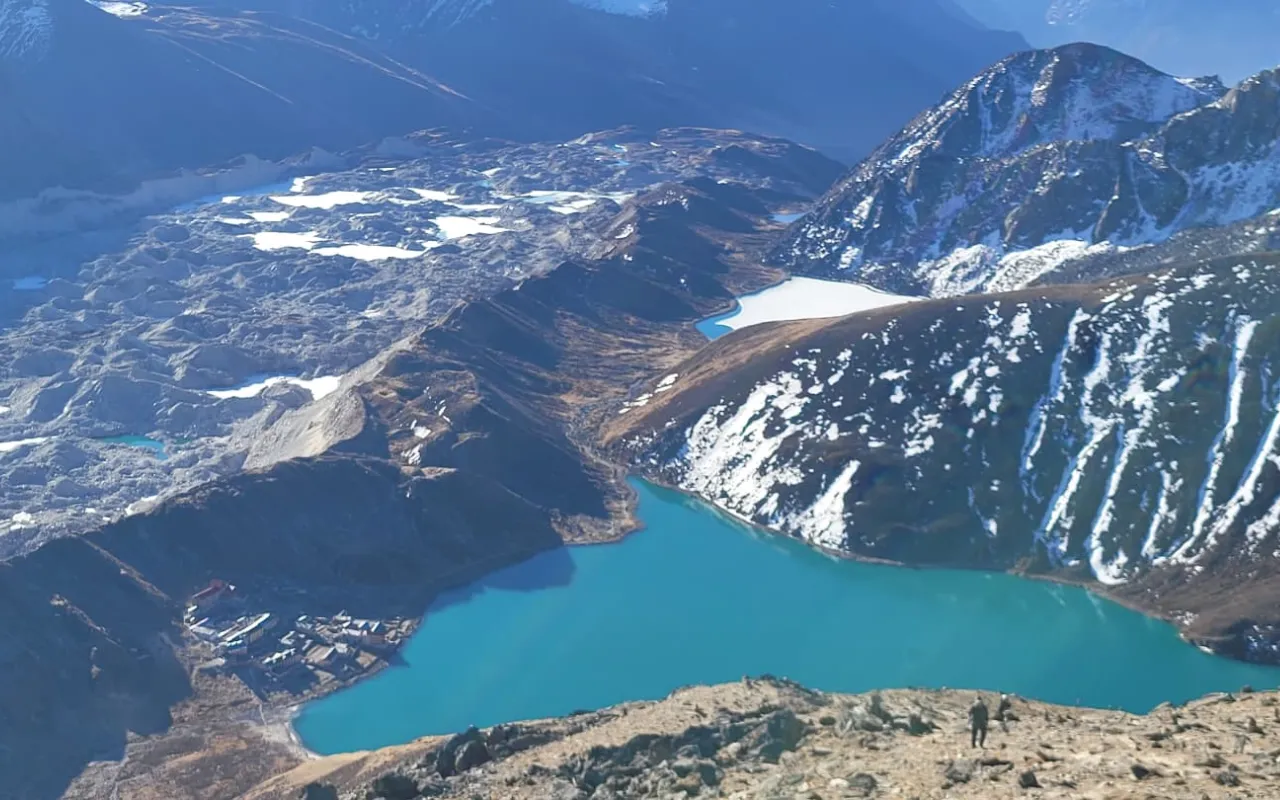
You branch off the main trail above Namche and head north-west into the Gokyo valley, following the Dudh Koshi past a chain of glacial lakes. From the village of Gokyo you climb Gokyo Ri (5,357 m), then cross the Cho La pass (5,420 m) eastwards to rejoin the classic route at Dzongla, continuing to Base Camp from there.
Gokyo Ri versus Kala Patthar
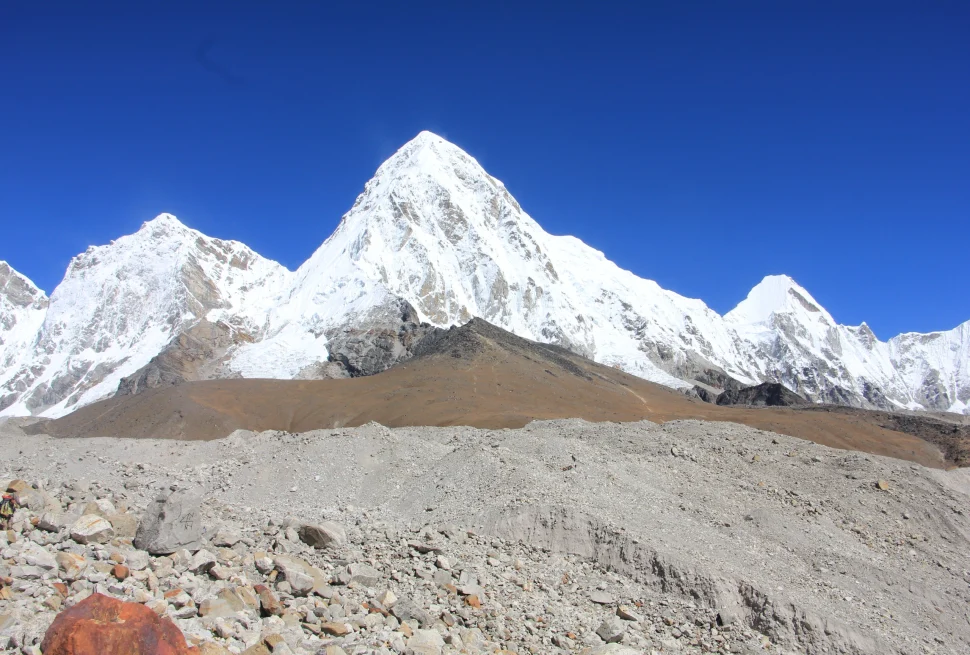
Kala Patthar gets you closest to Everest. Gokyo Ri gives you the better photograph. From the summit you see four eight-thousanders at once – Everest, Lhotse, Makalu and Cho Oyu – with the Ngozumpa Glacier, the longest in the Himalaya, grinding away below and the lakes glowing turquoise beneath you.
How hard is Cho La?
It is the crux of the trek. The eastern side involves a short glacier crossing that is straightforward in good conditions but genuinely serious in fresh snow. Crampons or microspikes are sensible, an early start is essential, and it is not a pass to attempt without a guide who knows the current conditions.
How long to allow
Budget 16 to 18 days from Lukla. The extra days over the standard trek buy you better acclimatisation as well as more scenery, which is part of why the completion rate is high despite the greater difficulty.
Best season
Late September to November. Cho La in spring is often snow-loaded, and while it is crossable, the window is less reliable. Winter crossings are for experienced parties only.
View our Everest Base Camp with Gokyo Lake & Cho La Pass trek, or get in touch to discuss whether it suits your experience.