
Daniel Laurent — France
My journey to Nepal was much more than a holiday. I came with a strong interest in Buddhism, spirituality, and meditation, but I left Nepal with a much deeper religious and spiritual connection. Before coming here, I knew Buddha mainly through books and what I had learned about his teachings. I understood Buddhism as a religion and philosophy, but I had never experienced it so personally. During my journey, I began to understand Buddhism as a way of living with mindfulness, compassion, patience, simplicity, and a better understanding of our own thoughts and desires. I feel that Nepal changed the way I look at life.
Beginning in Kathmandu
With the help of Leaf Travels and Tours, I began my journey in Kathmandu, where I first spent meaningful time meditating. Sitting quietly in a Buddhist environment, I could observe not only my own thoughts but also the traditional practices happening around me. I saw people walking slowly around stupas in prayer, turning prayer wheels, lighting butter lamps and incense, making offerings, joining their hands in prayer, and in some places performing full-body prostrations. I also heard monks and devotees reciting prayers and Buddhist chants. At first, I simply saw these as religious customs, but while meditating and watching people practice them with such patience and devotion, I began to understand that these actions were not simply rituals. For many people, they were ways of expressing faith, gratitude, discipline, compassion, and mindfulness.
What it means to pray
That realization made my meditation experience much deeper. I started asking myself what it really means to pray. I realized that prayer does not always have to mean asking for something for ourselves. It can also be a moment to become humble, grateful, compassionate, and aware of our actions. Watching people repeatedly walk around the stupa with devotion, turn the prayer wheels, light lamps, and pray quietly made me think about the importance of intention behind every action. I began to understand that Buddhist practice is not simply about what we do outwardly, but also about the state of mind with which we do it.
Swayambhunath and Boudhanath
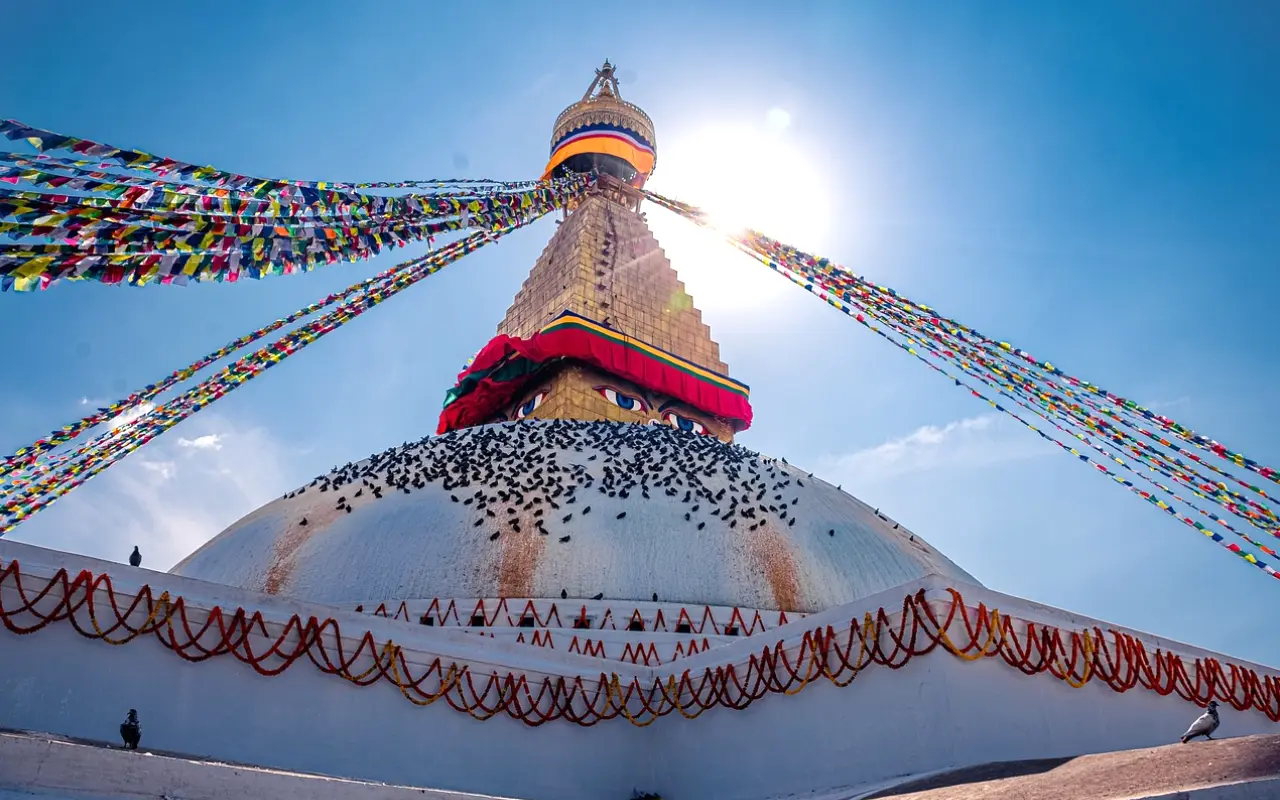
After this experience, I visited Swayambhunath Stupa and Boudhanath Stupa. At Swayambhunath, the prayer flags, prayer wheels, monks, pilgrims, incense, and peaceful atmosphere immediately made me slow down and reflect. Looking over Kathmandu Valley from the hill, I felt that this was much more than a historical monument; it was a place where people came to pray, reflect, and find inner peace. At Boudhanath, walking around the huge stupa among monks and pilgrims, listening to prayers and seeing people making offerings gave me another feeling of calmness. Because I had already spent time meditating and observing Buddhist practices, I was able to look at these traditions with a different understanding.
Inside the local gumbas
I also had the opportunity to visit local gumbas and Buddhist monasteries in Kathmandu. These visits helped me understand Buddhism beyond the famous tourist sites. I saw monks praying, studying, meditating, and following a simple way of life. I learned that Buddhism is not only about rituals or worship. It is about understanding suffering, recognizing attachment and unnecessary desires, developing compassion, practicing mindfulness, and learning to respond to life with greater wisdom. What I was learning in the monasteries connected naturally with what I had experienced during meditation.
Lumbini, where it began
But the most meaningful and powerful part of my journey was Lumbini — the birthplace of Lord Buddha. Knowing that Siddhartha Gautama was born in this place made the experience deeply emotional for me. Visiting the Maya Devi Temple and Sacred Garden, I found myself thinking about Buddha’s life and his search for the truth of human suffering. For me, Lumbini was not simply another Buddhist destination; it was the place where the story of Buddha actually began. Standing there made everything I had learned and experienced in Kathmandu feel much more real.
One birthplace, many traditions
Lumbini also showed me how far the teachings of Buddha have travelled around the world. I visited monasteries and temples connected with countries such as Thailand, Myanmar, China, Japan, Sri Lanka, Vietnam, South Korea, Cambodia, Germany, France, and others. Each monastery had its own architecture, traditions, and cultural style, but they were all connected by the teachings of Buddha. Seeing so many different Buddhist traditions gathered around the birthplace of Buddha was one of the most fascinating experiences of my trip. It made me realize that a message that began in Lumbini more than two thousand years ago has travelled across countries, cultures, and generations.
What meditation taught me
I also spent quiet time meditating in Lumbini, and by then my understanding of meditation had changed. I was no longer simply trying to sit quietly; I was trying to understand what was happening within my mind. I thought about my ambitions, worries, attachments, and constant desire for more. I began to understand the Buddhist teaching that attachment and uncontrolled desire can become sources of suffering. I learned that happiness does not always come from having more; sometimes it comes from appreciating what we already have, accepting change, and learning to let go. The idea of impermanence especially stayed with me — everything changes, and learning to accept that can bring a different kind of peace.
Returning to Kathmandu
After Lumbini, I returned to Kathmandu, but I felt different. The city itself had not changed, but the way I looked at it had. When I saw Boudhanath and Swayambhunath again, I no longer saw them only as beautiful monuments. I understood more about the faith, devotion, meditation, prayers, and teachings behind them. The prayer wheels, incense, butter lamps, chanting, offerings, and people walking around the stupas now had a deeper meaning for me. I realized that the greatest change during my journey had happened inside my own thinking.
I am sincerely grateful to Leaf Travels and Tours for making this journey so meaningful. From transportation and accommodation to sightseeing and guidance, everything was organized smoothly. Most importantly, they understood that I was looking for a spiritual experience rather than an ordinary tourist trip and gave me enough time to meditate, visit monasteries and gumbas, observe Buddhist customs, learn about the traditions, and reflect on my experiences.
I came to Nepal wanting to learn about Buddhism, but I left having learned something about myself. Lumbini will always remain the heart of my journey — not only because it is the birthplace of Buddha, but because everything I experienced in Kathmandu prepared me to understand the deeper meaning of being there.
I arrived in Nepal as a traveler. I left with a deeper faith, a calmer mind, and a new way of thinking about life.
Thank you, Leaf Travels and Tours, for helping make this journey so meaningful.