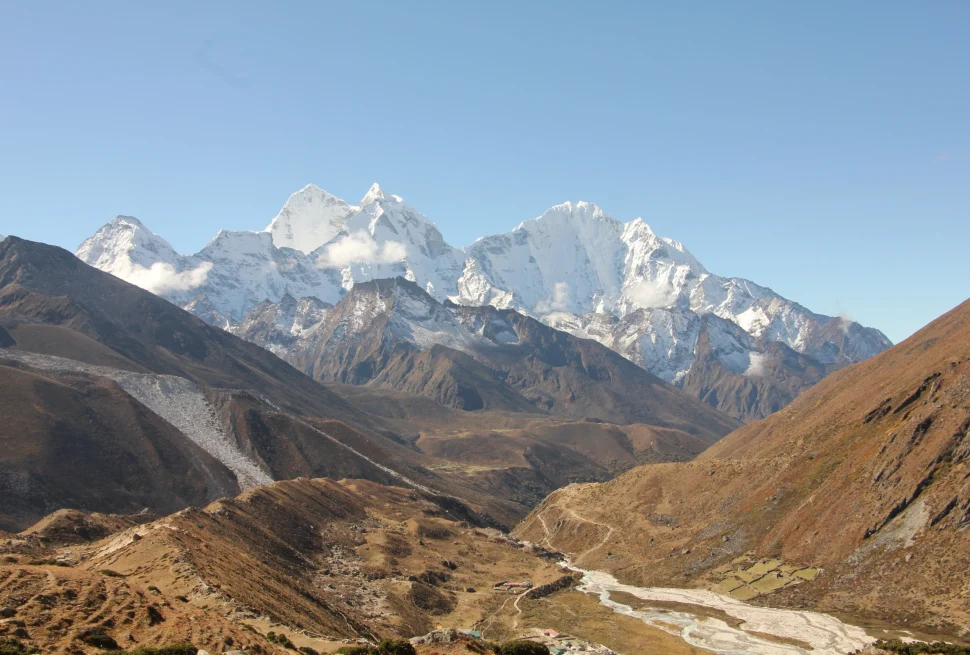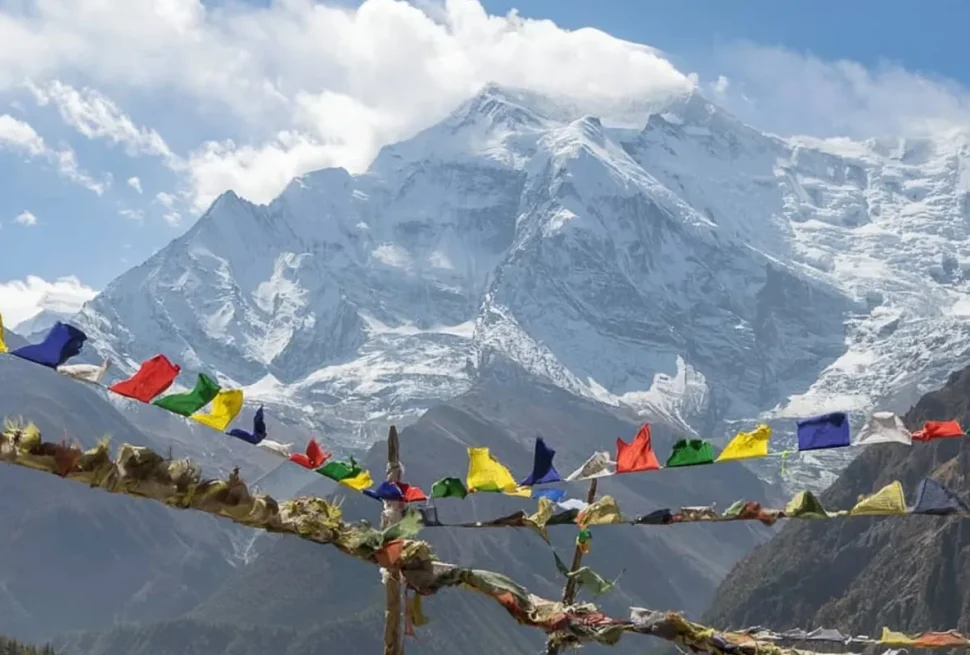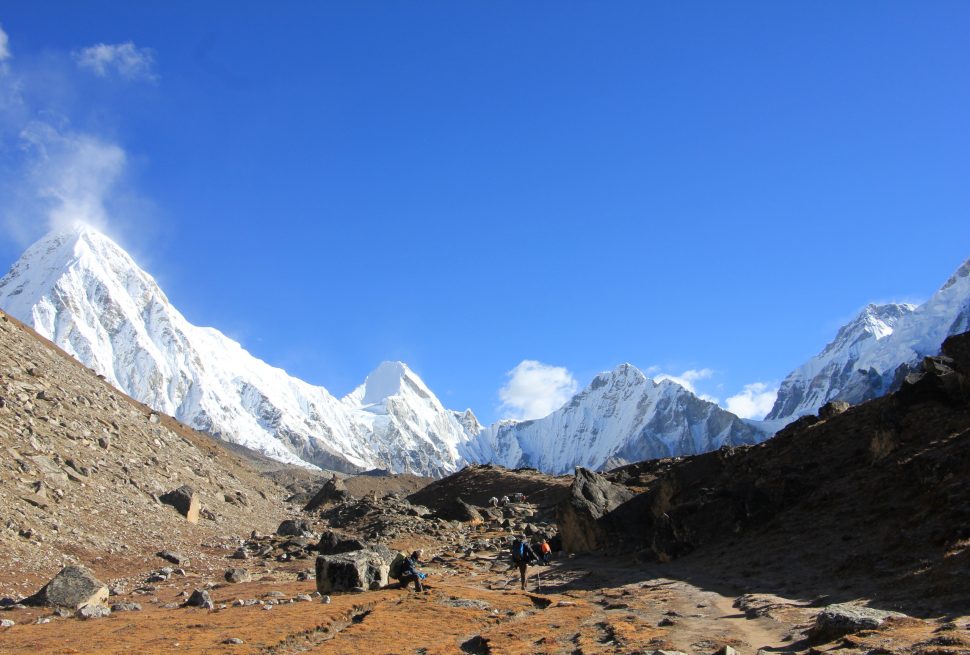

Everest is the highest mountain. Ama Dablam is the one people photograph. Its ridged, symmetrical spire dominates the middle Khumbu, and the walk to its base camp is one of the most rewarding short treks in Nepal.
Where it sits
Base camp is a grassy shelf at around 4,600 m, reached by a side trail from Pangboche on the main Everest route. It is a comfortable day up and back, or an overnight if you want dawn light on the face.
Why go
Because the perspective changes completely. From the trail Ama Dablam looks impossibly steep and remote. From base camp you are directly beneath the south-west ridge, close enough in climbing season to watch teams moving on the lower slopes and to see the hanging glacier — the dablam, or pendant, that gives the mountain its name.
Combining it with Everest Base Camp
This is how most of our trekkers do it. Adding Ama Dablam costs one or two days and slots neatly into the acclimatisation schedule — you gain height, sleep lower, and arrive at Dingboche better adapted than if you had walked straight through. It is that rare detour that makes the main trek easier rather than harder.
As a standalone trip
If you have only ten days, a Lukla–Namche–Tengboche–Ama Dablam loop is a genuinely satisfying trek in its own right. You get Sherpa villages, Tengboche Monastery, high views and a proper base camp, without ever crossing 5,000 m.
Best time
October and November for clarity; April and May if you want to see the mountain in bloom with climbers on the route. Winter is cold but the light on the face is exceptional.
See our Ama Dablam Base Camp trek or ask about adding it to an Everest itinerary.