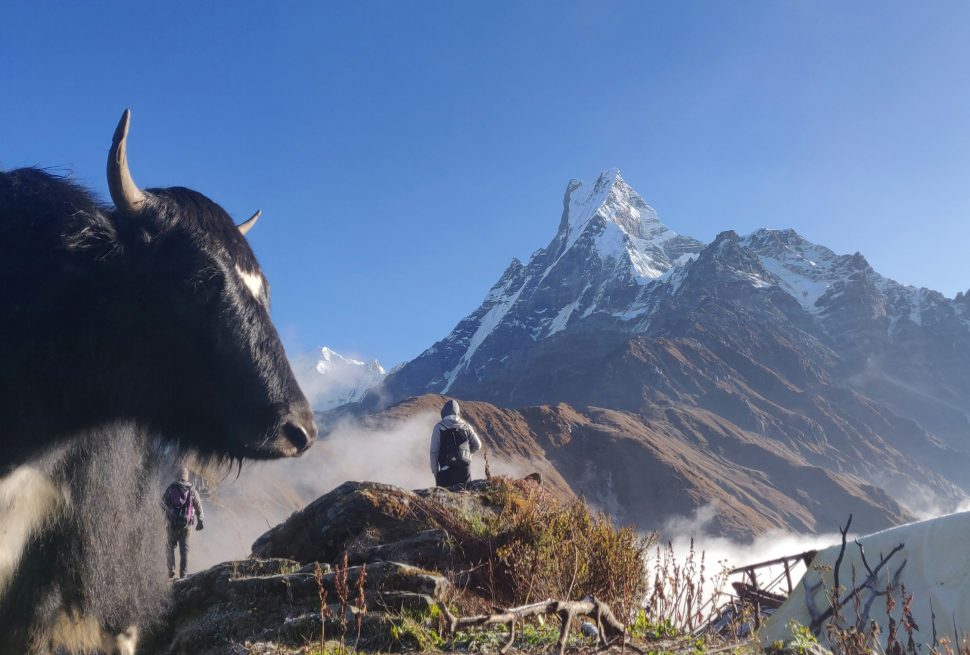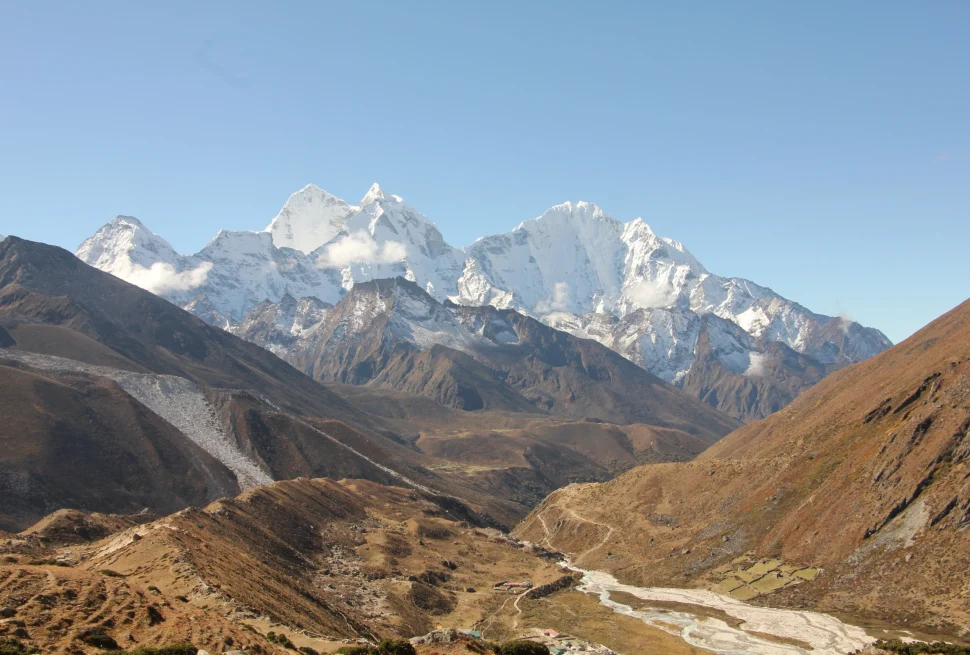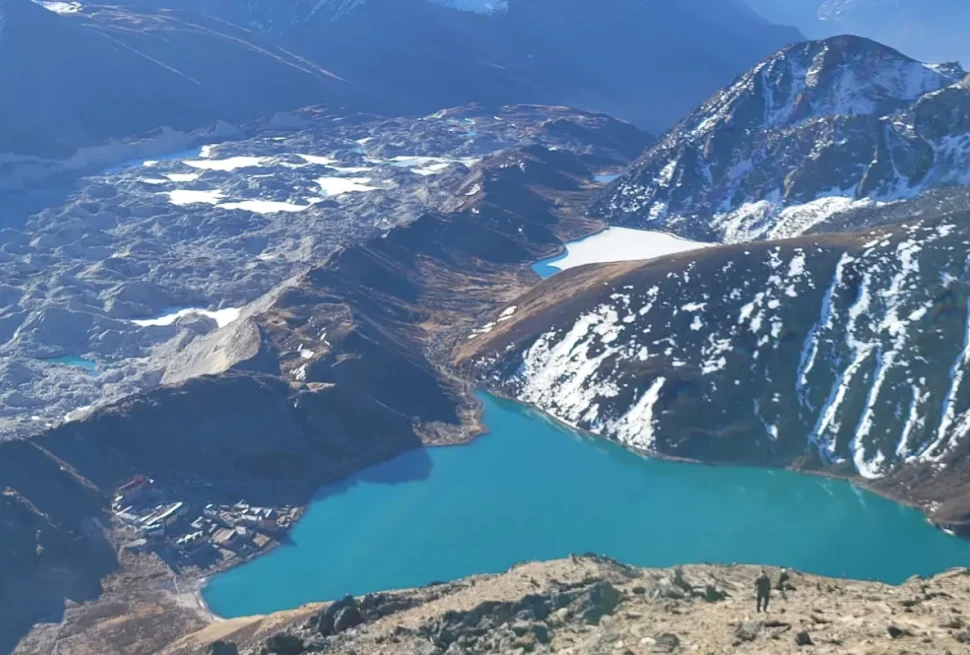
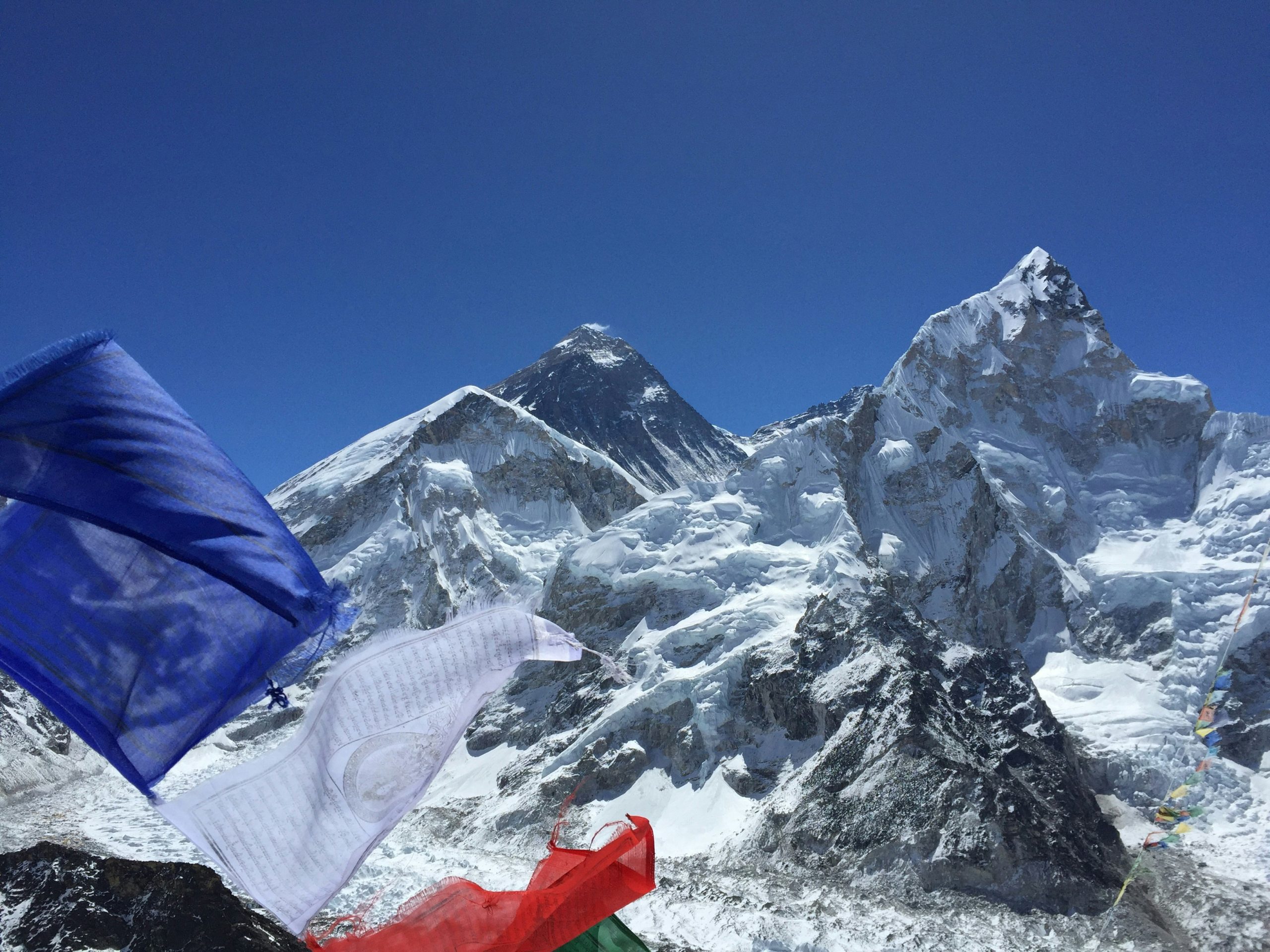
The Annapurna Sanctuary is a glacial basin surrounded almost entirely by peaks over 7,000 m. You walk in through a narrow gorge, and the valley opens into an amphitheatre with mountains on every side. Few places in the Himalaya feel so enclosed by scale.
How long it takes
Seven to twelve days depending on where you start. Beginning from Nayapul or Jhinu Danda keeps it short; adding Poon Hill at the start makes a fuller loop of around eleven days. Base Camp sits at 4,130 m — high, but well below Everest trekking altitudes.
The route
From Pokhara you drive to the trailhead, then climb through Ghandruk or Chhomrong, both Gurung villages with superb views. The trail then drops into the Modi Khola gorge and follows it north through bamboo and rhododendron forest to Machhapuchhre Base Camp, and finally Annapurna Base Camp itself.
Why people prefer it to Everest
- No mountain flight. You drive from Pokhara, so no Lukla weather delays.
- Lower altitude means significantly less risk of altitude sickness.
- More varied landscape — subtropical forest, terraced farmland and glacier in one week.
- Hot springs at Jhinu Danda on the way out, which after a week of walking is not a small thing.
Permits and cost
You need the ACAP (Annapurna Conservation Area) permit and, since 2023, a licensed guide. Budget USD 700 to 1,400 for a guided trek including permits, lodges and meals — noticeably cheaper than Everest, largely because there are no flights.
Best season
October to November for clear skies, March to April for rhododendron in flower. Avoid the monsoon: the gorge section is genuinely avalanche-prone in heavy snow and leeches are relentless in summer.